

 Starving for Growth
The Operator Trap
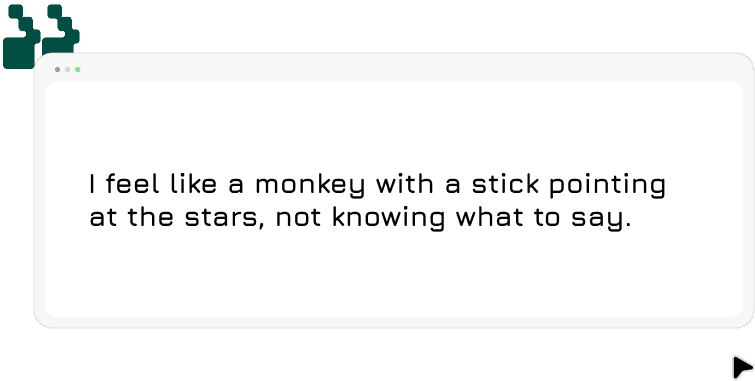
That's a real founder describing their relationship with AI. Not someone who's ignoring the shift – someone who's staring right at it and can't figure out where to start.
They're not alone.
The 80/20 Split
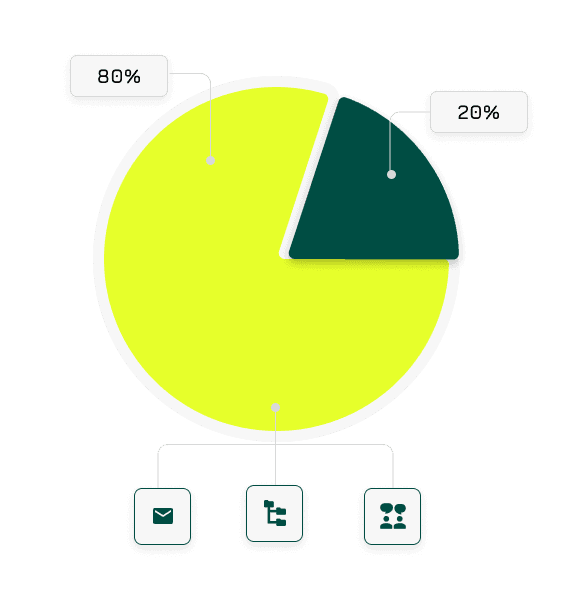
The Operator Trap is a pattern where 80% of a founder's working hours go to operational maintenance, leaving only 20% for growth work.
We see it in almost every small business we talk to.
The Alternative Board found that small business owners spend the majority of their time on email, employee management, and customer-facing tasks rather than strategic growth.
HBR adds another layer: the average knowledge worker toggles between applications 1,200 times per day, losing the equivalent of five working weeks per year to context switching alone (HBR, Murty et al., 2022).
The split is brutal.
Four out of five working hours go to maintenance - admin, firefighting, meetings, legal, finance, keeping the lights on. The remaining fraction goes to the work that actually grows the business. New channels. New products. Strategy. The work that excites you and drove you to start the company in the first place.
You're basically the highest-paid admin person in your entire company. As the founder, it's ridiculous and it really sucks all the life out of you.
The 80/20
Split
The Operator Trap is a pattern where 80% of a founder's working hours go to operational maintenance, leaving only 20% for growth work.
We see it in almost every small business we talk to.
The Alternative Board found that small business owners spend the majority of their time on email, employee management, and customer-facing tasks rather than strategic growth.
HBR adds another layer: the average knowledge worker toggles between applications 1,200 times per day, losing the equivalent of five working weeks per year to context switching alone (HBR, Murty et al., 2022).
The split is brutal.
Four out of five working hours go to maintenance - admin, firefighting, meetings, legal, finance, keeping the lights on. The remaining fraction goes to the work that actually grows the business. New channels. New products. Strategy. The work that excites you and drove you to start the company in the first place.
You're basically the highest-paid admin person in your entire company. As the founder, it's ridiculous and it really sucks all the life out of you.
The Trajectory
This doesn't plateau. When 80% of your time goes to maintenance, growth flatlines. Not because you lack ambition, but because you have zero bandwidth left to deploy.
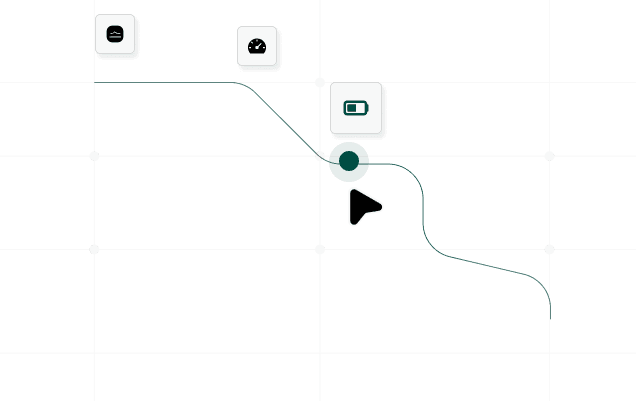
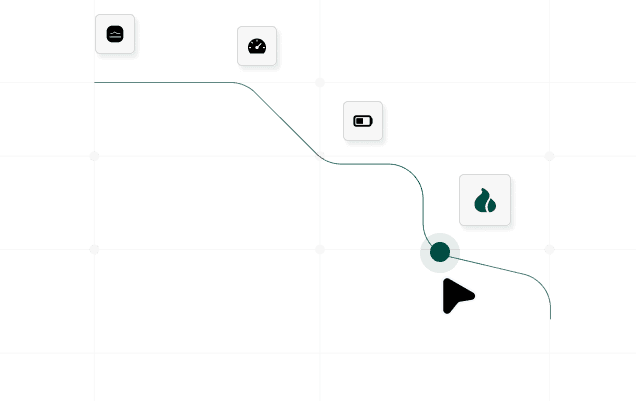
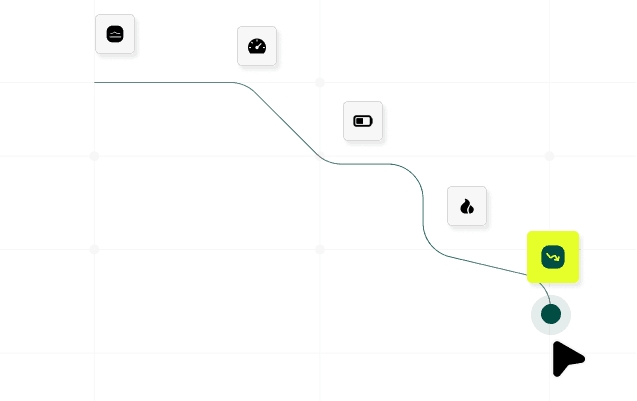
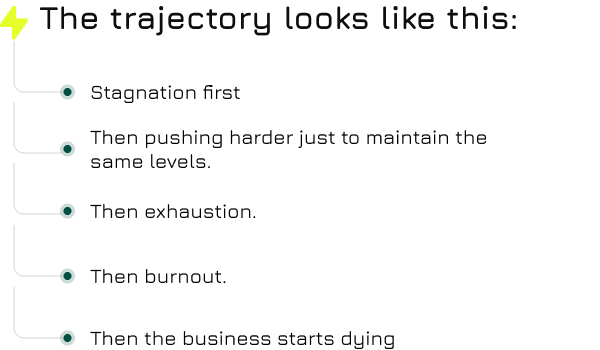
Not from a single failure, but from the slow erosion of the founder's capacity to do anything beyond keep it alive.
The
Trajectory
This doesn't plateau. When 80% of your time goes to maintenance, growth flatlines. Not because you lack ambition, but because you have zero bandwidth left to deploy.
Not from a single failure, but from the slow erosion of the founder's capacity to do anything beyond keep it alive.
The Margin Pressure
Meanwhile, AI is compressing costs across every industry. McKinsey puts it at 60 to 70% - that's the share of employee tasks that generative AI could automate.
That's not a projection about some distant future - it's the math that's already reshaping pricing.
Creative agencies that charged $5,000 for an ad campaign now face AI-assisted competitors delivering fifty ads for $1,000.
Service businesses that took a week to produce a deliverable now compete with firms that do it in a day.
Businesses stuck in operational maintenance won't have the bandwidth to pivot when margin pressure arrives. And it's arriving. The ones who can adapt will have the infrastructure to move quickly. The rest will be too busy keeping the lights on to respond.
The Margin
Pressure
The math is changing - fast.
Meanwhile, AI is compressing costs across every industry. McKinsey puts it at 60 to 70% - that's the share of employee tasks that generative AI could automate.
That's not a projection about some distant future - it's the math that's already reshaping pricing.
Businesses stuck in operational maintenance won't have the bandwidth to pivot when margin pressure arrives. And it's arriving. The ones who can adapt will have the infrastructure to move quickly. The rest will be too busy keeping the lights on to respond.
The Overwhelm Is Real
According to There's An AI For That (theresanaiforthat.com), there are over 46,700 AI tools available as of early 2026. That number validates the overwhelm. You're not behind. You're not missing something obvious. There are 46,700 options and none of them connect to each other.
Every creator and educator has a trick, a hack, a prompt to show you. The problem is that none of it gives you a unifying system to add it to. That's why it doesn't work. None of it compounds.
You've been doing the right things. ChatGPT, Zapier, browser extensions - the instinct to adopt AI was correct. The problem is that none of it was connected to a system.


Tools without architecture don't compound. They accumulate.
The Overwhelm
Is Real
Tools without architecture don't compound.
They accumulate.
According to There's An AI For That (theresanaiforthat.com), there are over 46,700 AI tools available as of early 2026. That number validates the overwhelm. You're not behind. You're not missing something obvious. There are 46,700 options and none of them connect to each other.
Every creator and educator has a trick, a hack, a prompt to show you. The problem is that none of it gives you a unifying system to add it to. That's why it doesn't work. None of it compounds.
You've been doing the right things. ChatGPT, Zapier, browser extensions - the instinct to adopt AI was correct. The problem is that none of it was connected to a system.
The Ceiling
Most founders hit this wall around the same point.
Chatbots get you maybe fifty percent of the way there. You paste in context every session. You repeat yourself. You get output that's close but never quite right - because the AI doesn't know your team, your priorities, your products, or your decisions.
The AIOS methodology
is designed to push output quality - measured as the percentage of deliverables usable with minimal editing - from roughly fifty percent to ninety percent once full business context is in place. Databricks found the same thing: even top-tier LLMs can't exceed ~80% accuracy without structured context (Leng et al., 2024).
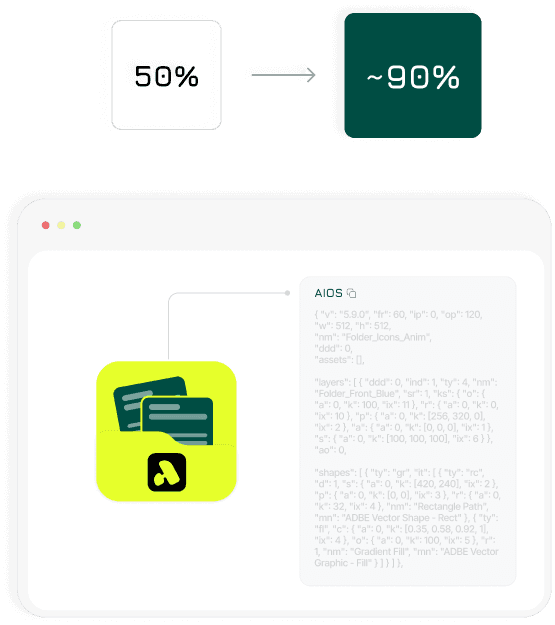
The difference isn't the model. It's the architecture underneath it.
The Ceiling
The difference isn't the model. It's the architecture underneath it.
Most founders hit this wall around the same point.
Chatbots get you maybe fifty percent of the way there. You paste in context every session. You repeat yourself. You get output that's close but never quite right - because the AI doesn't know your team, your priorities, your products, or your decisions.
The AIOS methodology
is designed to push output quality - measured as the percentage of deliverables usable with minimal editing - from roughly fifty percent to ninety percent once full business context is in place. Databricks found the same thing: even top-tier LLMs can't exceed ~80% accuracy without structured context (Leng et al., 2024).
The Bridge
When the maintenance load lifts - when the Operator Trap breaks - something changes.
You can focus. Not on everything. On the one thing that actually matters.
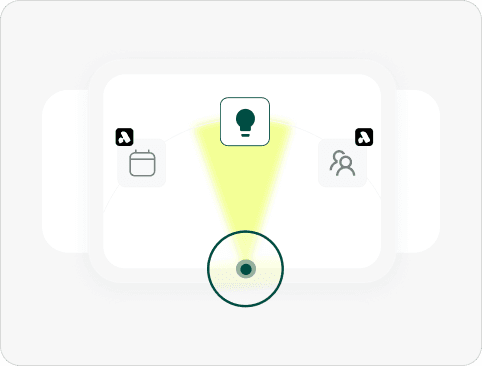
Once you have this bandwidth, it is a completely life-changing experience as a founder. Like a laser beam just pointed at a new initiative or a new channel or a new product.
That's what this is about.Not adding more tools.Building the system that gives you your bandwidth back.
The Bridge
When the maintenance load lifts - when the Operator Trap breaks - something changes.
You can focus. Not on everything. On the one thing that actually matters.
Once you have this bandwidth, it is a completely life-changing experience as a founder. Like a laser beam just pointed at a new initiative or a new channel or a new product.
That's what this is about.Not adding more tools.Building the system that gives you your bandwidth back.

Get AI automation recommendations tailored to your industry. Free, no obligation
Get Your Free AI Blueprint